Pruning – Winter 2022

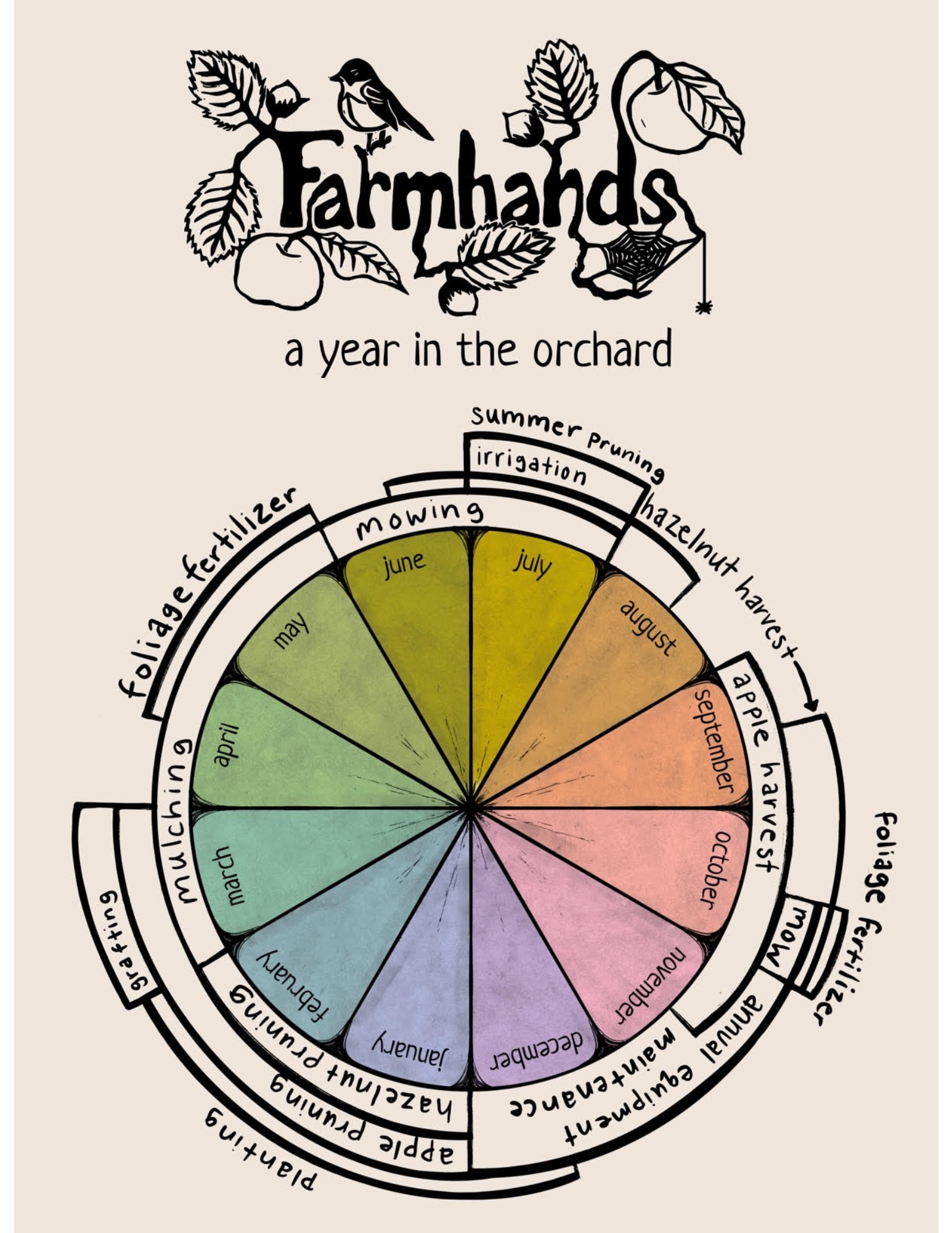
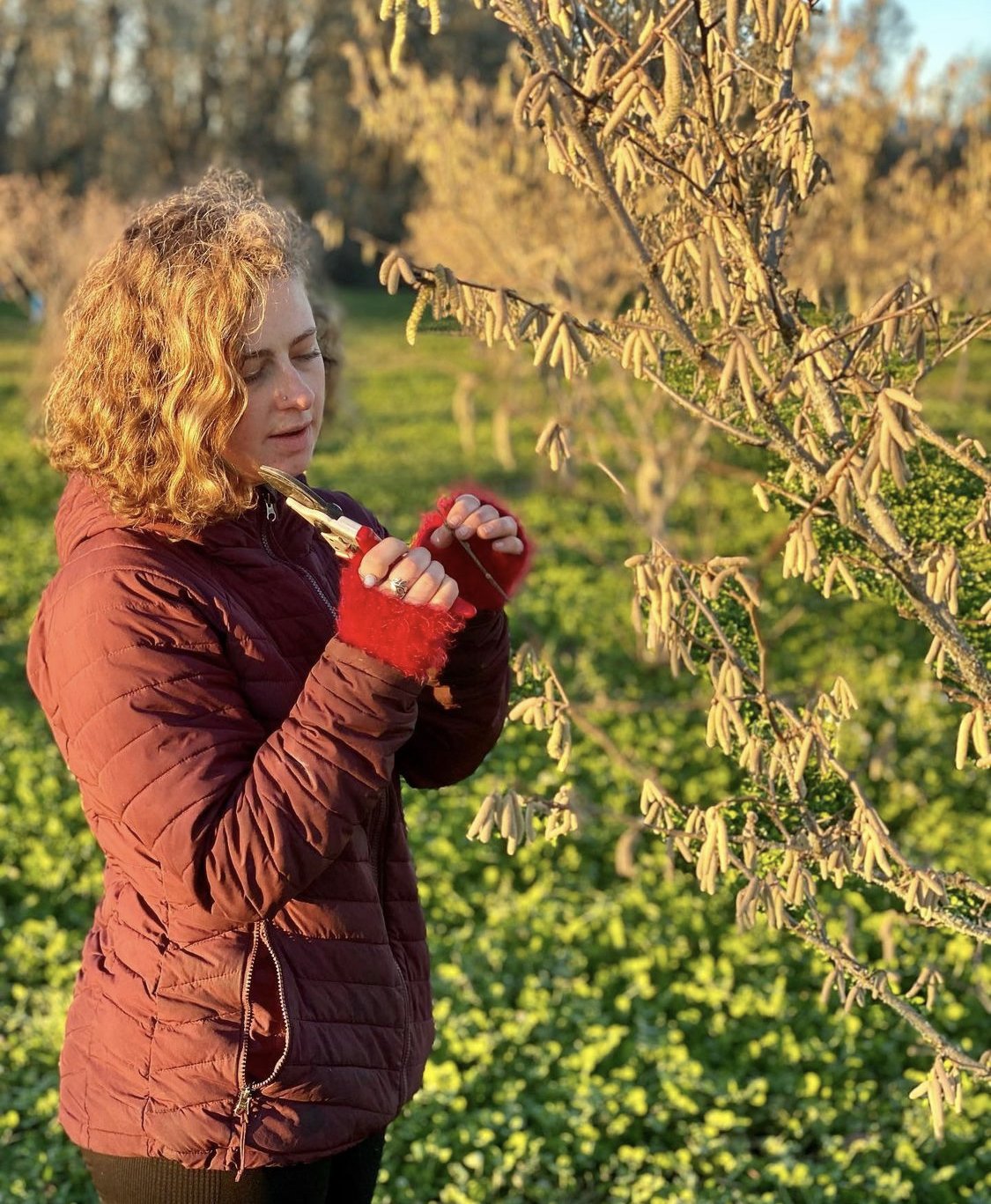
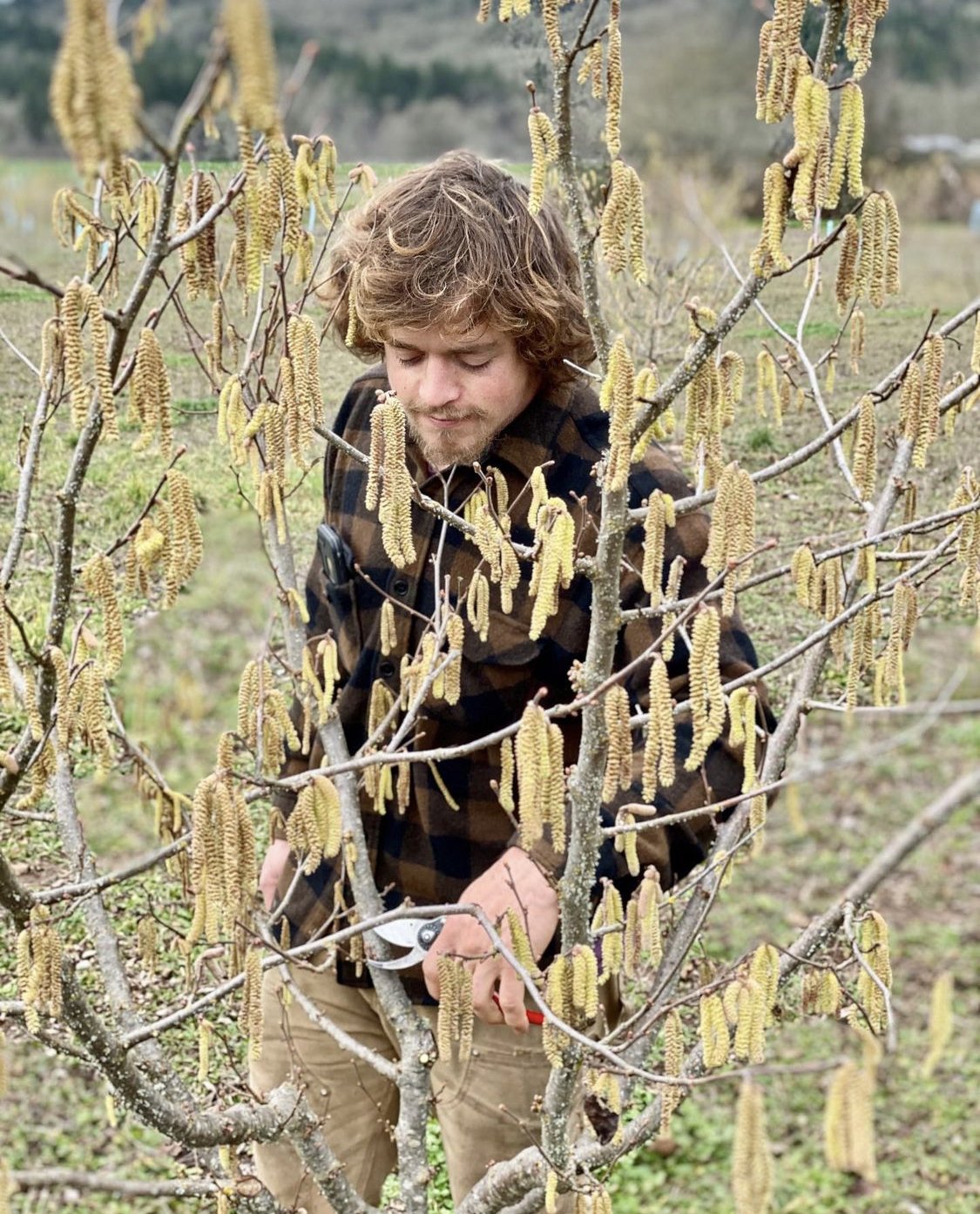
Pruning season is in full force. The hazels and apples get pruned this time of year. In the young trees, pruning helps them train the tree to grow that will withstand the weight of ice, nuts and fruit. In the older orchards pruning is done using pole saws rather than clippers. We prune to remove diseased and dead wood, extend the life of the orchard, increase light infiltration and give vigor to the tree.We prune when it is cold and dry during January & February to reduce the risk of bacterial/fungal infection and allow the trees to have an easier time healing from the cuts.

Day Grazing in the Hazelnut Orchards – November 14, 2021

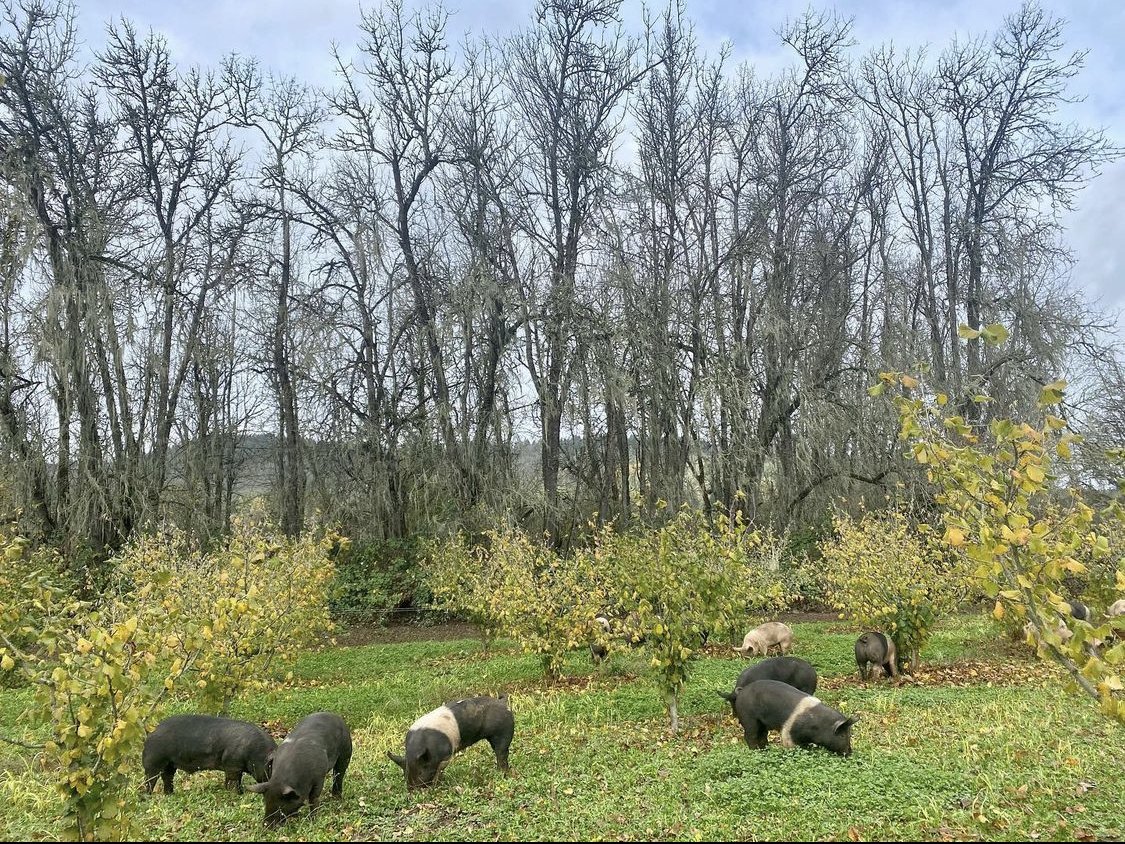
There are multiple benefits to running the pigs through the hazelnuts after harvest. We set up a paddock in the oak trees adjacent to the hazelnut orchard. We are able to keep the pigs in the forest and open up the young orchard to supervised day grazing. 

One of the main pests for a hazelnut is the filbert (aka hazelnut) moth. This moth overwinters as a worm in the hazelnuts and acorns from the oaks that have dropped on the ground. When we run the pigs through the hazelnuts and oak groves, the pigs eat the fallen acorns left over from the harvest. Not only does this help us mitigate the filbert worm population and limit spraying, it also creates really tasty pork products. We have come to realize farming, ranching and our own bodies rely heavily on biodiversity and synergistic relationships. What a joy it is to try to cultivate that.

Bees, Friends and Splitting Hives – Summer 2021

Our friends at Humble Bee Honey live down the street. They often keep a number of hives on the farm seasonally. It is always fun to visit with them when they come to take care of their yard. This day they were making new hives. The bees multiply in number and can outgrow their bee boxes. The beekeepers place a new box on top of the hive and the bees migrate to the top. The smoke used helps to calm the bees and make them more chill. Warmth of the original hive in the bottom box keeps the top box warm. Once enough bees have moved upstairs a barrier is placed between the two boxes so the top bees cannot get back to the original hives. Later a queen is introduced to the new box and the hive is formed. If the beekeepers didn’t do this the “new hive” would still form and likely swarm. This means when the hive outgrows their home they would leave the box in search of a new home. Have you ever seen a swarm? If we see a swarm of hundreds to thousands of bees in a tree, or on the side of our house you better believe we are calling Erica and Ronnie at Humble Bee to come catch it.  

Fish Guts – June 18, 2020

Every spring and fall there us an opportunity to fertilize the trees. We suspect our trees are deficient in nitrogen and spraying fish guts can help correct that, as well as deposit a broad spectrum of micronutrients and elements such as zinc, phosphorus, and calcium. We like to spray the fish guts, lets the leaves absorb the food, reassess and apply as needed, but the rule is no nitrogen after July. The trees need time to go dormant. If you keep fertilizing the trees keep growing and don’t transition well going into winter. Fish guts over chemical fertilizer any day! It smells amazing!

Mulching – April 24, 2020

Mulching season is in full swing every spring. We give the yearling trees a thick layer of mulch. Our orchards are organic, so taking care of a single tree is a multistep process. We cannot simply spray the base with fertilizers and chemicals to make the weeds disappear. We first scalp the area around the base of the tree using a hoe to remove all the grass. We place a tree protector around the small tree to protect is from sunburn, wildlife and pests. We then apply gravel around the base of the tree protector for weed and critter control. After that we give the tree a generous helping of mulch. Our mulch blend is typically wood chips with some manure, hard woods are preferred because they break down slower. The mulch helps to fertilize and feed the tree while keeping the weeds and grass from growing back. Mulch also locks in moisture to be called upon during the dry summer months. We mulch in the spring while there is plenty of moisture to collect. We repeat this process yearly until the tree is larger and doesn’t need as much support. One down, a thousand to go!

Apple Grafting – April 5, 2020

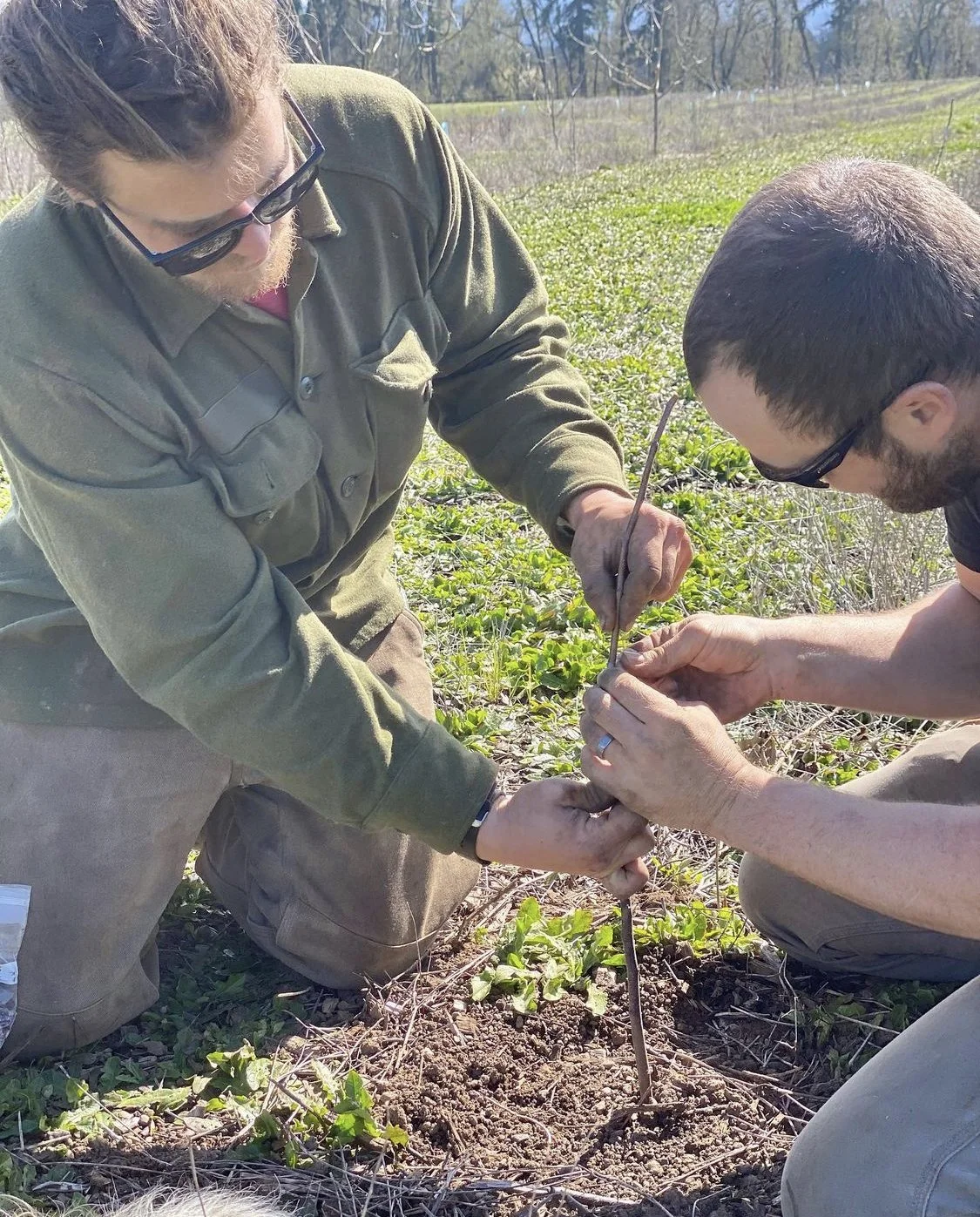
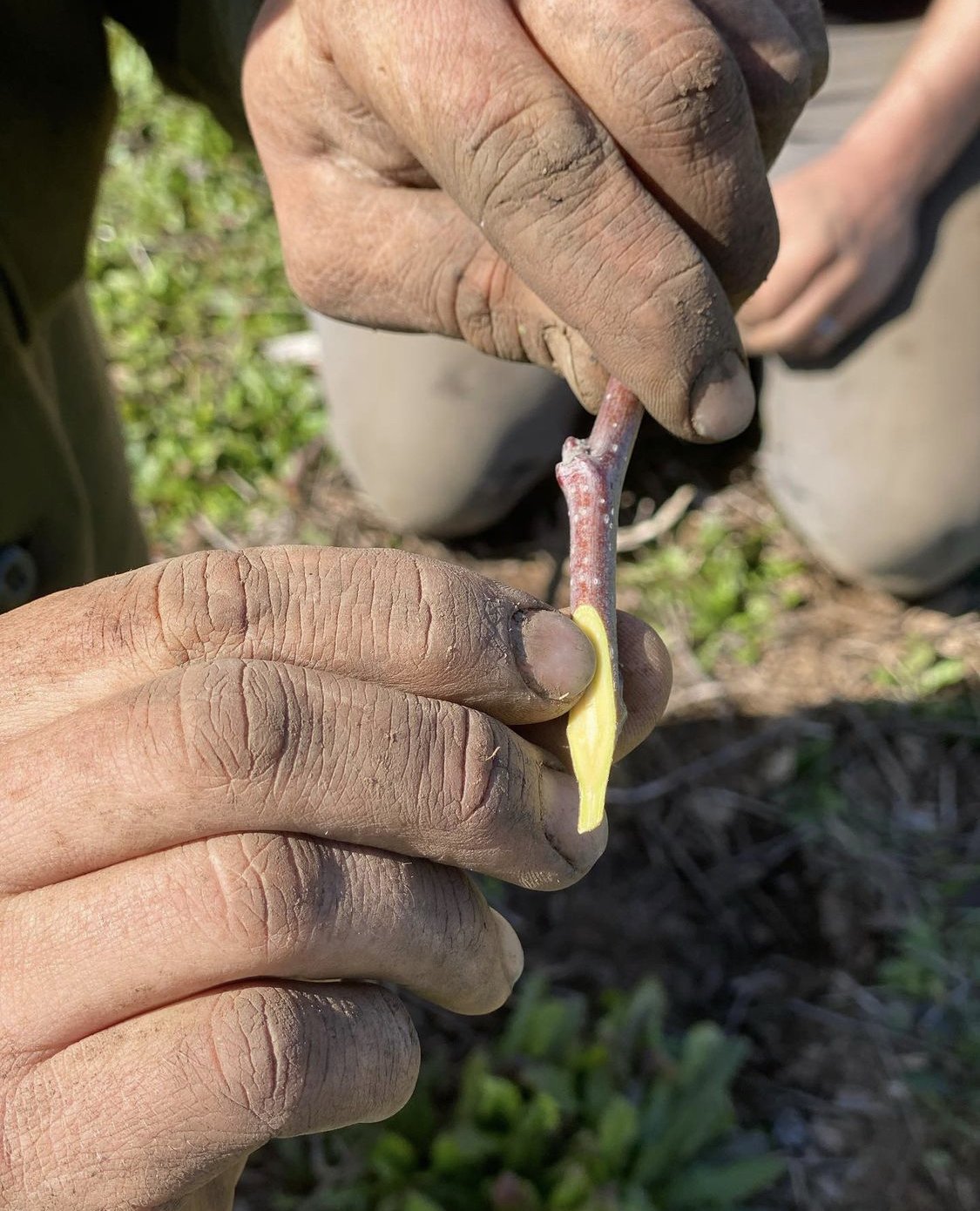
The farm is in the process of grafting apple trees. We start by planting rootstock, Bud 118, which will create a strong base for tree on which to graft. When we graft we take scion wood from the desired parent tree, in this case a Golden Russet, and a branch from our rootstock. What makes an apple tree desireablevaries. It could be a good eating apple, or a tree that grew an apple with the correct tannin, acid and sugar profile to make cider. We take a piece of scion wood from the desireable tree and graft it to its new trunk, the rootstalk. We cut them both precisely and secure the branches together with tape. The tree will heal by forming a callous, sap will travel from the rootstalk to the new bud and they will join together to create the tree. When the tree matures it should produce the desired fruit, for this tree Golden Russet apples. 

Why not just plant the Golden Russets directly? Every seed you plant in the ground produces a different plant, just like humans, the offspring (seeds) of the trees are not identical to their parents, so even if you used seeds from the most amazing apples, it is not guaranteed that your tree will produce the same fruit. If you want to produce a specific variety of apple, identical to the source you have to propagate, or graft it. Grafting ensures that we get the fruit we want by using scion wood from the desired tree. Some other benefits to this process is the root stock will help keep the tree about 15-20ft tall when a normal Golden Russet would grow to around 40ft, which is too large for our orchards. Bud 118 grafts will also produce fruit in about five years, rather than the 10-15yrs it would take a full Golden Russet to mature. 

We have to extend our thanks to our neighbors at Even Fall Cider for providing us with high quality scion wood from their farm, thank you!

Cover Crops – February 3, 2020

Cover crops can benefit your soil and ultimately your bottom line. We plant cover crops in the pasture, orchards and garden using a no-till drill. Not only do cover crops help correct nutrient deficiencies in the soil, they also make excellent forage for the livestock and mulch for the garden. Cover crops reduce soil erosion, increase water infiltration, control weeds, decrease soil compaction and increase organic matter. We like to say that soil is our main product, and the bison, hazelnuts, apples and pigs are the byproduct. 

Examples of cover crops we like include Triticale, Common Vetch, Red Clover, Bayou Kale, Chicory and Austrian Field Pea.We recommend planting as many varieties as you can and see what takes. “Producers often get caught planting three or four types of high yield, domesticated grasses and legumes, but it is important to recognize that indigenous herbs, many of which are deep-rooted perennials, provide a number of attributes including medicinal properties, nutrient density, drought resistance…there is a strong case for incorporating various herbs and other plants in paddock seed mixtures,” (Eco Farming Daily). We try to plant more than just a few species and hope that our land and animalsbenefit.

Bees, Catkins and Hazelnut Pollination – January 31, 2020

These long slim flowers that form on the hazelnut trees are called Catkins. Would you be surprised to learn that the bees are not actually helping pollinate the trees? The bees are cute, we love bees, they help pollinate the apples and all sorts of other plants around the farm but they are actually “stealing” pollen from the hazels. 

Hazelnuts are wind pollinated aka anemophilous. Hazelnuts are also monoecious, meaning they have both male and female flowers on the same tree. The male flower forms Catkins, and the female part of the flower is a tiny bud that is often too small for the bees to get into and pollinate. Though hazelnuts have both male and female flowers on the same tree, they are self-incompatible, meaning they cannot set nuts with their own pollen. There has to be a compatible pollinizer, from a different variety, that is planted nearby for the wind to pick up and carry the pollen throughout the orchard. It is also recommended that you have at lease three different pollinizers in an orchard plot to cover early, mid and late blooms in the crops.

At the farm we grow six main varieties of certified organic hazelnuts. In organic farming we find that variety of diversity is key for healthy plants and a functioning ecosystem. This biodiversity honors the role that each species, no matter how small has to play. Even though the bees may not be really helping the orchard, the orchard is helping the bees and there is enough pollen to go around. Nature is a wonderful role model.

Mixed Orchards & Silvopasture – December 28, 2019

The farm planted seven strips of apple, hazelnut and alder trees in the middle of a large bison pasture. This may seem odd at first but we intend to use the orchard rows as dividers, with cross fences, to create smaller paddocks. When the trees are maturewe may even have the bison graze in the orchard rows. We are interested to see how we can integrate our systems.; the trees, the pastures and livestock rather than separating them. Having integrated systems is mutually beneficial. The trees provide shade while bison eat the grass on the orchard floor, the pigs clean up the left over fruit and nuts and fertilize the orchard simultaneously. Mixed plantings in orchards can improve the overall health of the orchard. Like most things in organic farming, diversity creates resilience. Having different types of trees in the orchard helps reduce pest transmission, fungal and bacterial infections in the trees and allows us to see which trees grow the best. In addition to mixed orchards, we plant hedge rows for pollinator species and native plants around the farm. Native hedge rows are low maintenance, conserve water and create healthy places for people and wildlife. We can get more profit out of a plot while promoting biodiversity diversity and increasing the health of the soil. 

While the orchard strips are not exactly a silvopasture (Silva, Latin for “forest”), we aim to integrate more trees into our grazing operation. We have some silvopasture in the woods, and it turns out livestock can forage on a lot more than just grass. It is not necessary to cut down the forests to make your farm “workable”, you just have to get creative with your fencing and work with it.  

Filbert Worm Mitigation – August 20, 2019

We are working on researching strategies to reduce the population of Cydia Latiferreana, also known as the hazelnut worm, filbert worm or filbert moth in our orchards. This moth is a key pest in the Pacific Northwest and is one of the most economically important insects worldwide. After mating the female moths begin to lay eggs near developing nuts. Eggs hatch in eight to ten days, and the tiny larvae search out the nuts. They burrow into the nut to feed on the kernel for two to four weeks before they bore their way out. These little moths can make or break a harvest and severely impact profits. Traditional management of this pest in commercial orchards relies on chemical sprays. 

At the farm we utilize surveillance with filbert worm traps. We are working with the University of Oregon Hallet Lab to research ways to integrate our pigs into the orchards and surrounding oak forests, as the moths also like to use fallen acorns from the oaks as hosts. In addition we work for other farms and help them monitor their filbert worm populations so they can limit spraying and only spray when indicated.

Riverfront Restoration Project – August 10, 2019

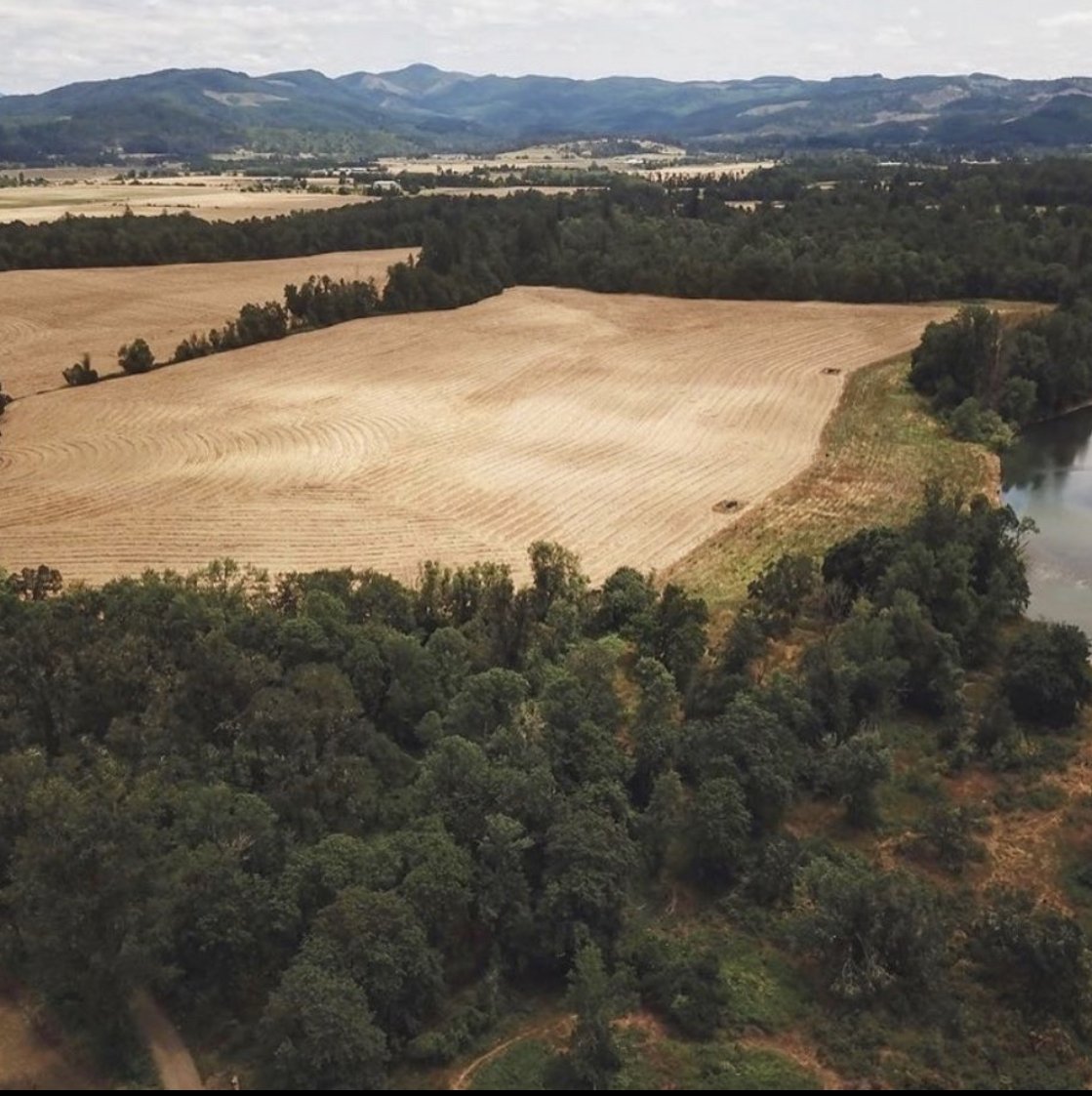
oIn this image you can clearly see the strip of green next to the river, which is the original site for the riverfront restoration project. The strip will eventually grow into a native forest. One of the goals is to provide shade on the water to promote a healthier fish habitat and extend the greenway from the state land up the river. The farm currently has approximately 80 acres enrolled in the project, with almost 80,000 native shrubs, trees and plants. There are over 25 different varieties planted including Oregon Grape, Elderberry, Indian Plum, Mock Orange, Snowberry, Maple and Fir trees to name a few. We are looking forward to cultivating the large field on the left of the site and more restoration projects in the future. Being good stewards to the land that has been entrusted in our care is an incredible honor. 

Many thanks to our partners in this project: the Oregon Watershed Enhancement Program (OWEB), the Meyer Memorial Trust (MMT), the Conservation Reserve Enhancement Program, and the Coast Fork Watershed Council.

Monoculture vs. Biodiversity – May 10, 2019

The farm is in the process of converting the property from annual ryegrass production to perennial orchards, pastures for livestock, habitat and restoration. This particular pasture on the right (see photo) was taken out of ryegrass production and turned into pasture for the bison four years ago. In this bunch you can see a variety of grasses, clover, legumes, plantain and volunteer “weeds”. It takes a long time to begin to heal the land, but it’s a start.

Biodiversity is diversity in plant and animal species but also of microorganisms, especially in the soil, that are essential for a healthy ecosystem. Management practices such as adding cover crops, increasing perennial systems, limiting herbicides and pesticides, rotational grazing, no till planting and providing habitat editions has benefited the farm both financially and ethically. Its fun to see the results.

Flame Weeding – February 7, 2018

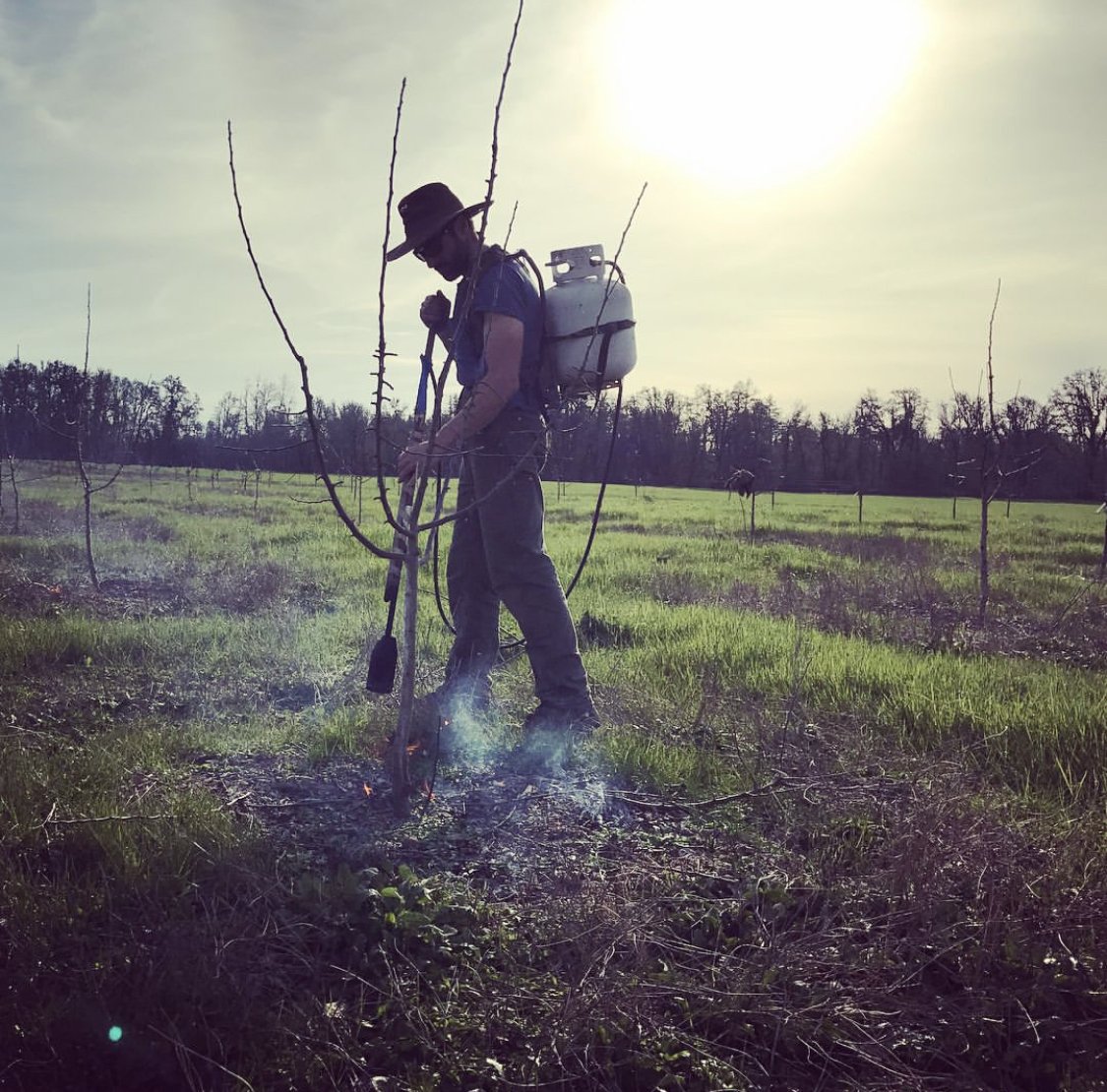
Taylor is flame weeding the cider apple orchard. Tay uses a flame torch attached to a propane tank instead of spraying chemicals to control weeds. With the flame you wilt the new growth of plants that you don’t want around, you don’t have to char them to a crisp, just knock them back and stunt their growth. Its all about timing.

Brush Stacking Party – January 27, 2018

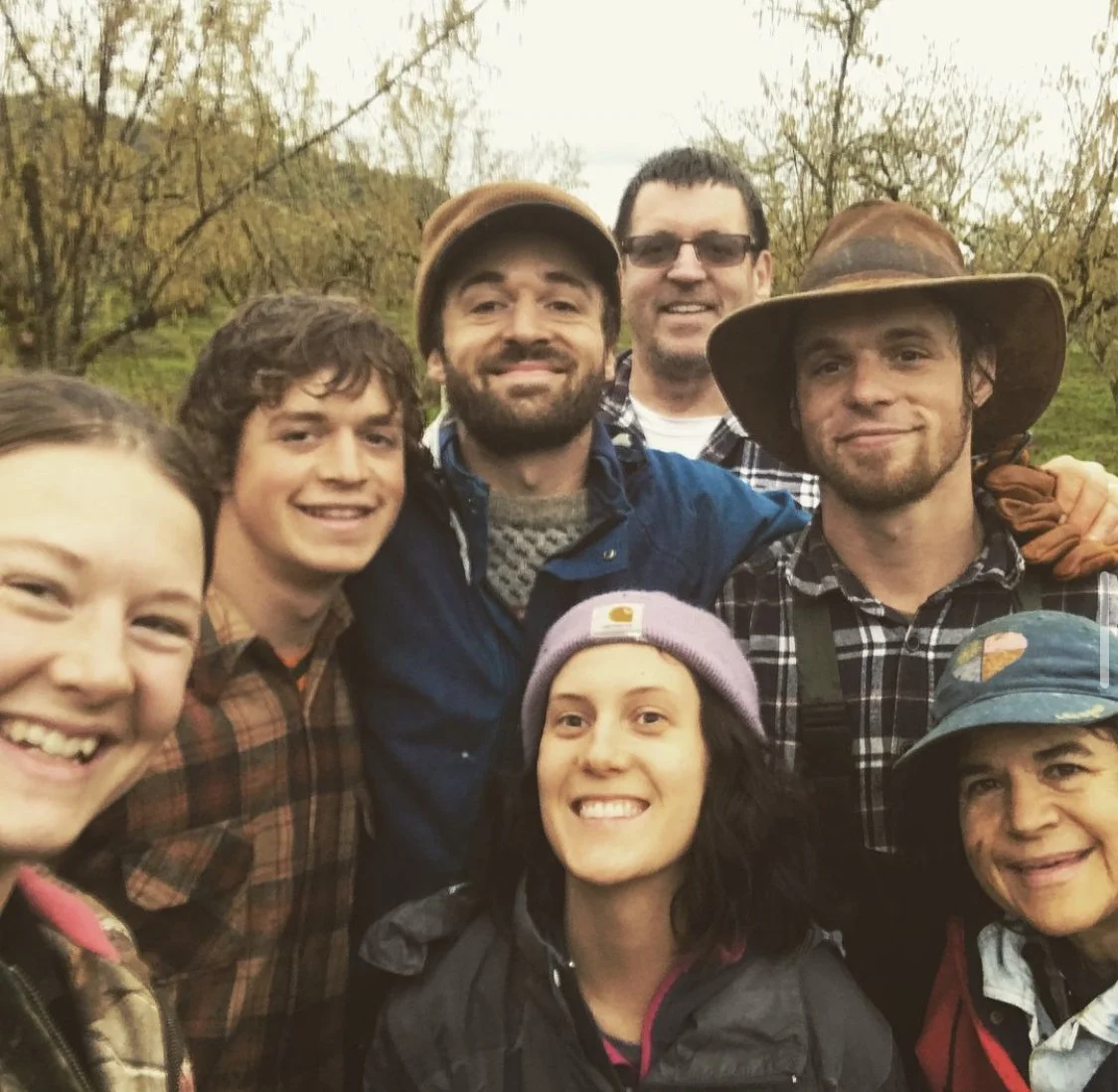
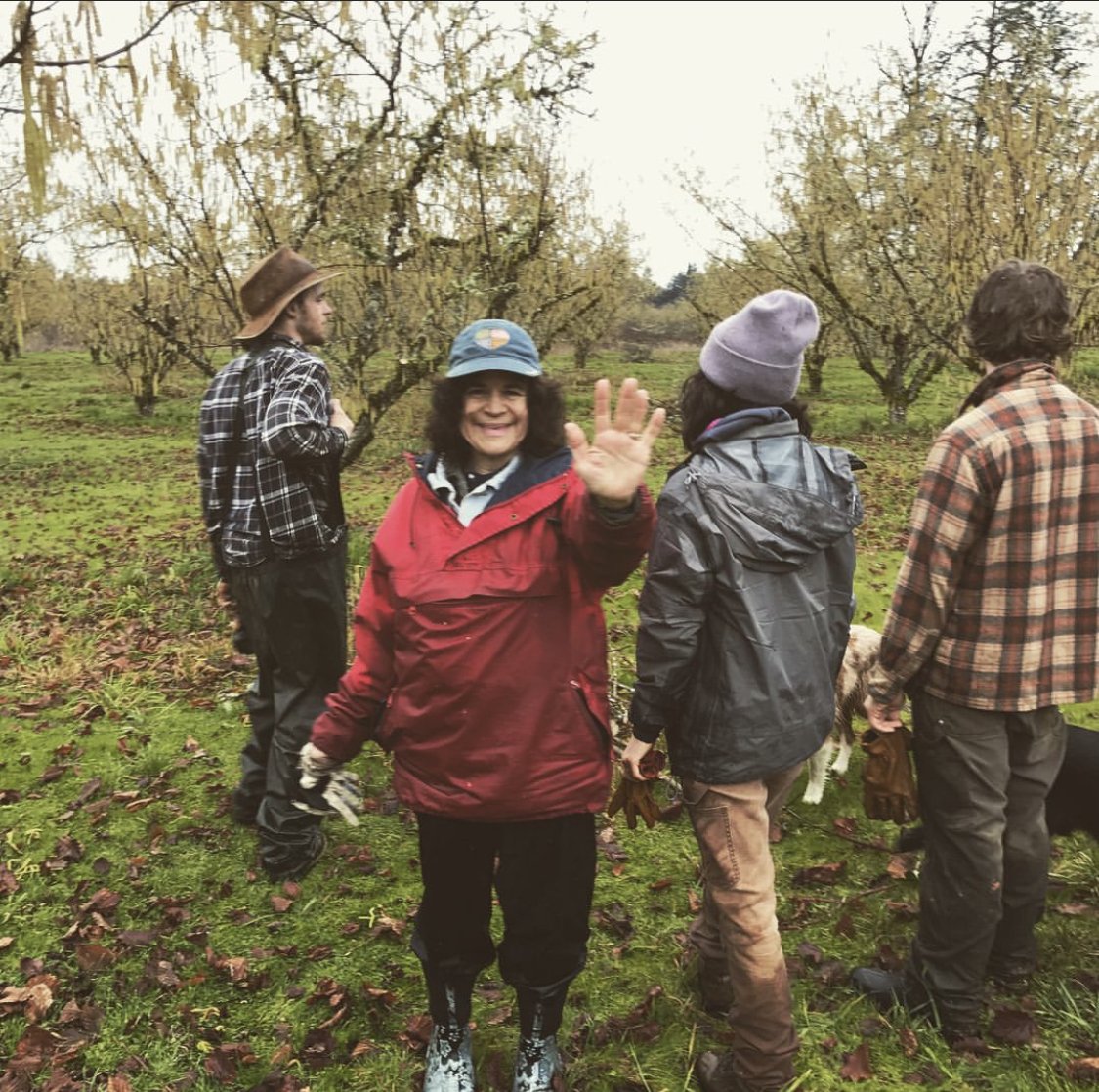
The farm leases a mature hazelnut orchard from a neighbor about a mile downriver. This is a great opportunity to learn how to work with older, more productive trees than the young trees recently planted on the main property. The trees we planted are turning five years old, but it could take around a decade before they will be productive. In the meantime this 30yr old orchard will keep up busy. The leased orchard used to be “Honor Earth Farm,” and has been in organic production for many years. The photos are from our brush stacking party. After the orchard is pruned all the sticks need to be picked up and placed in piles to be pushed by the tractor and later burned.

Big Leaf Maple Project

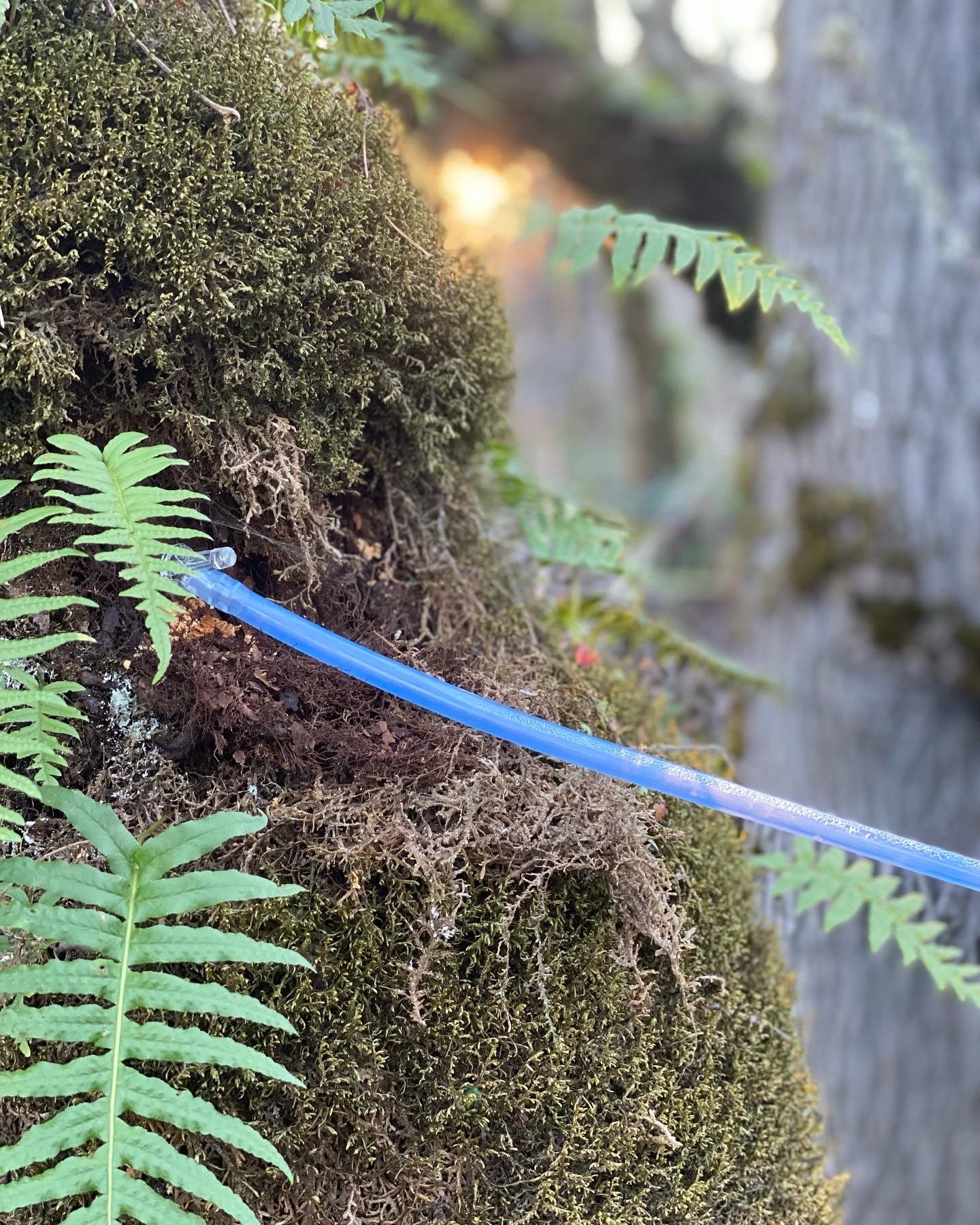
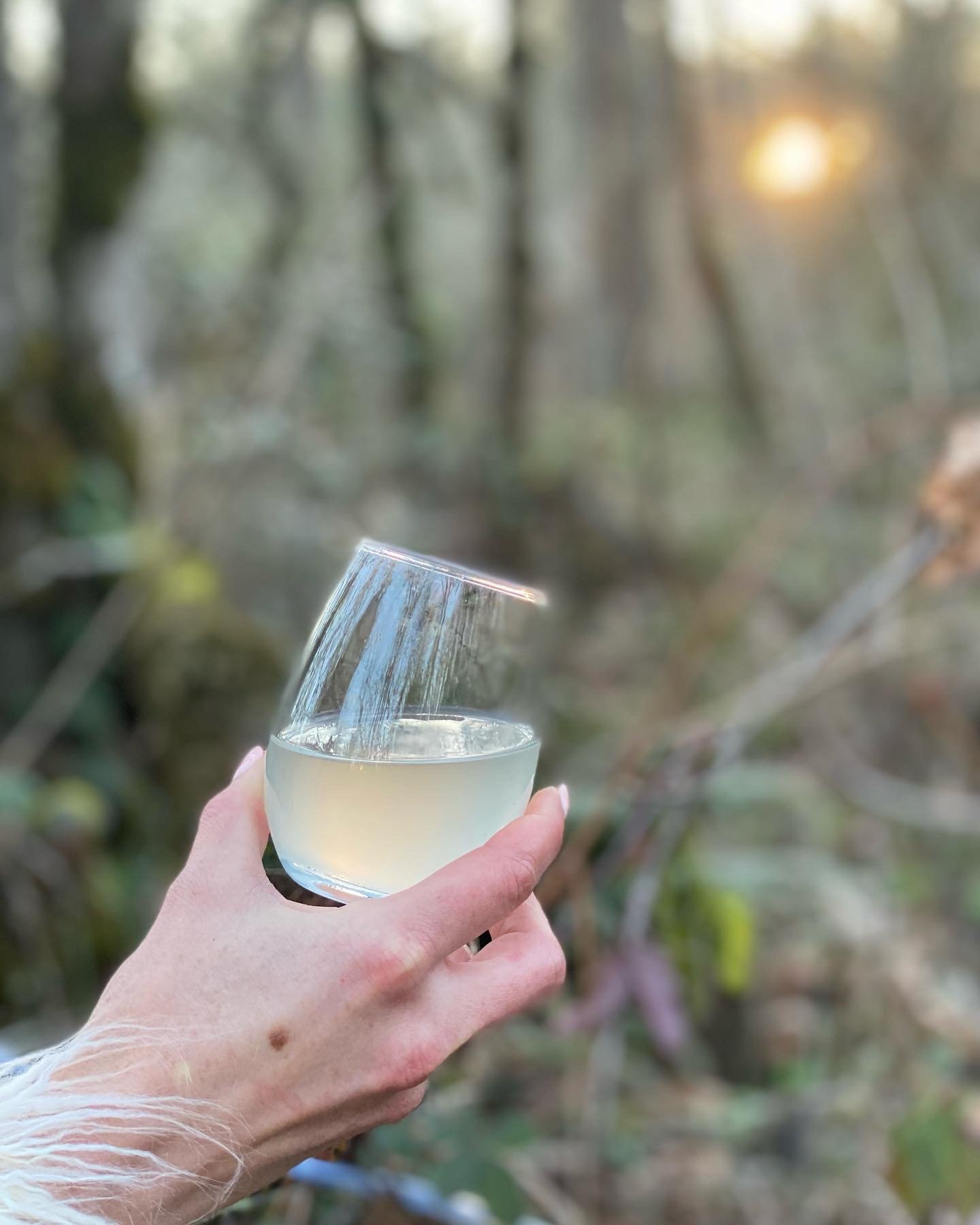
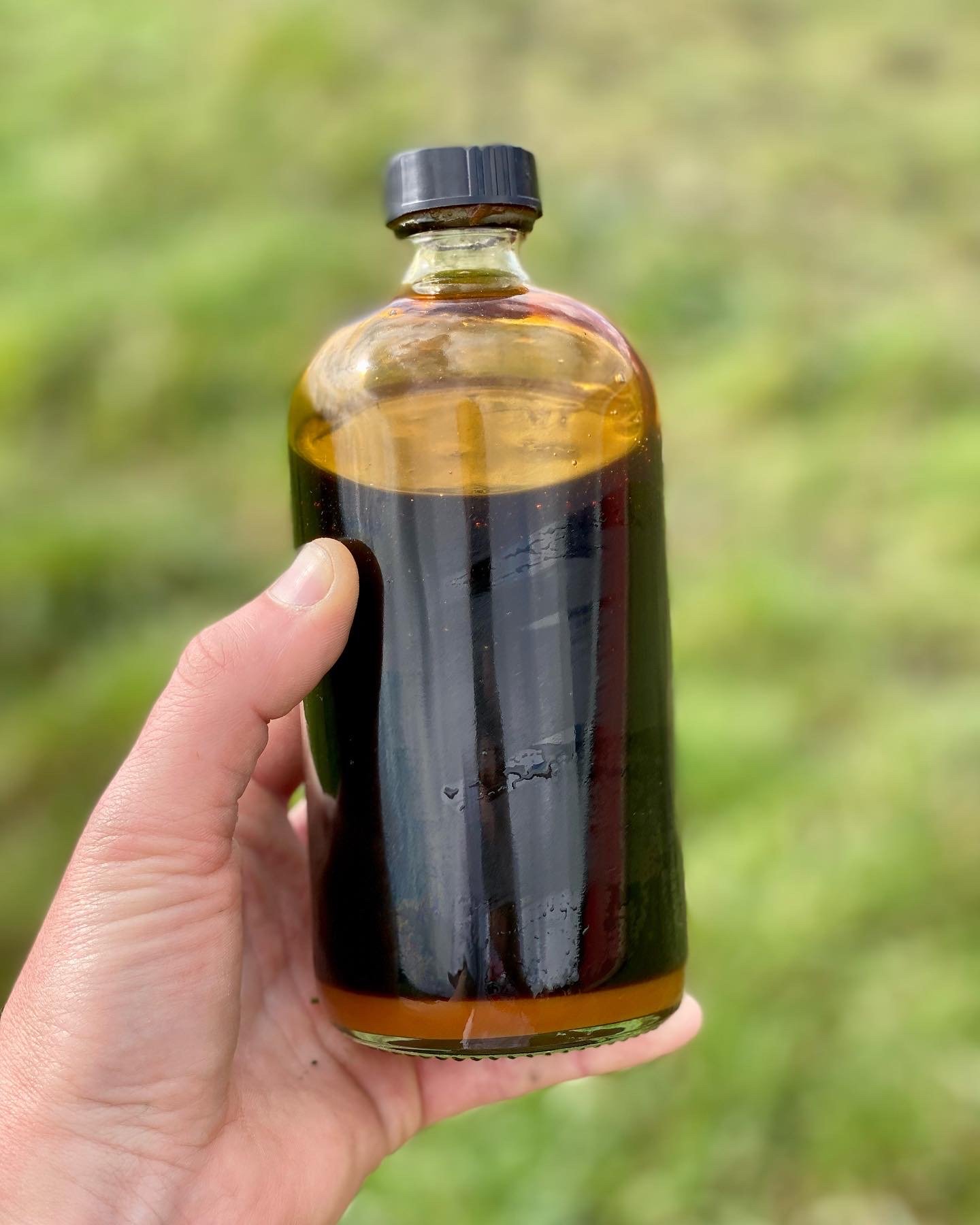
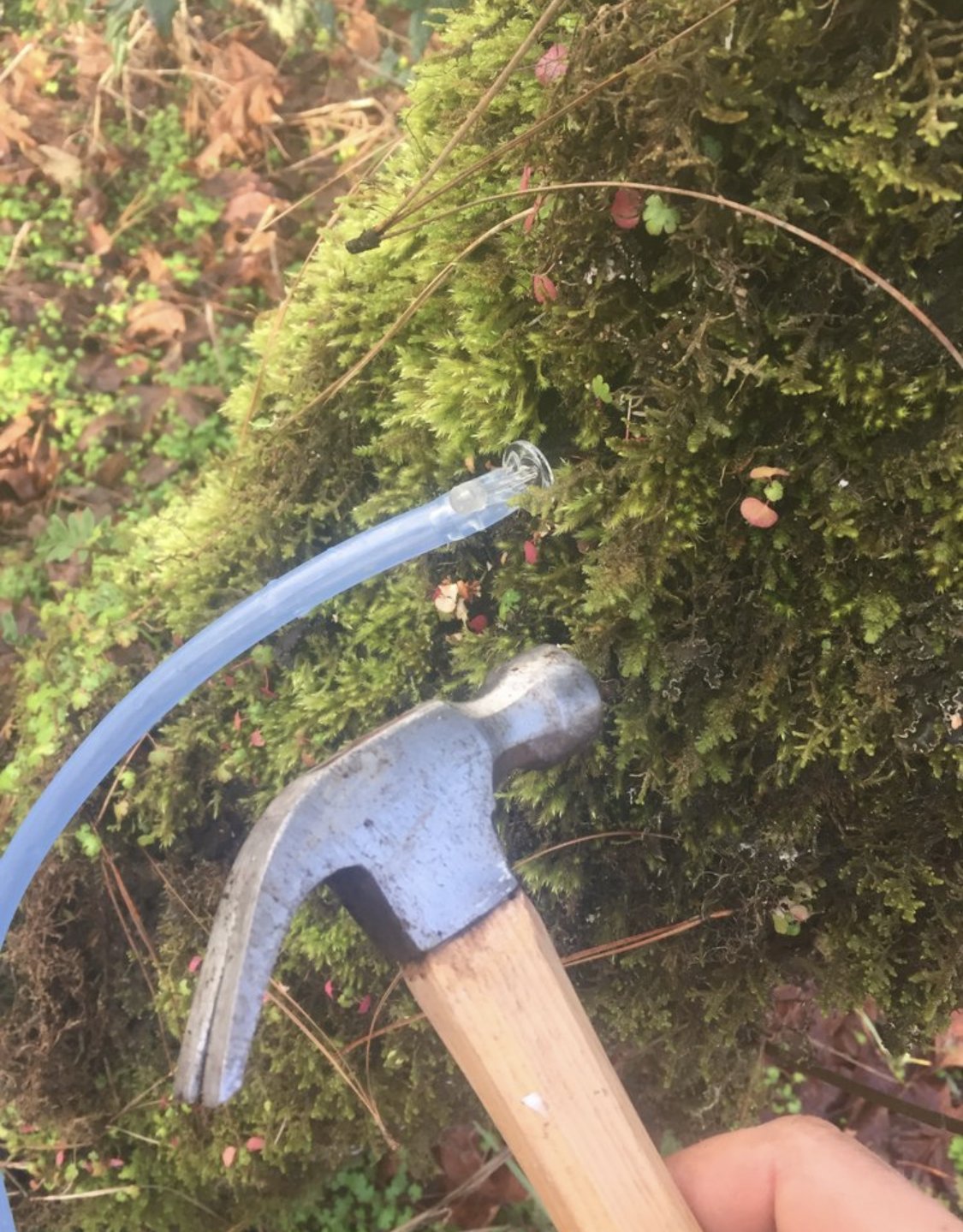
The farm is involved in a project with Oregon State University that is exploring the viability of producing maple water & maple syrup from Big Leaf Maple in the Willamette Valley. Big Leaf Maple sap does not have as high of a sugar content as the traditional Sugar Maple from the Northeast, but they produce tons of maple water! When the season turns cold the taps start to flow. We have been collecting maple water from trees on the farm, but the project extends to multiple sites from Portland area to the surrounding Eugene area. Much of the maple water that is collected will be run through a reverse osmosis machine to make a more concentrated solution. Thereafter we can boil it in the evaporator until it reaches syrup concentration at 66.9 Brix (% sugar). The project is aimed at creating maple syrup and other maple water products. Maple water is an isotonic beverage, similar to coconut water with a lot less food miles attached for locals.